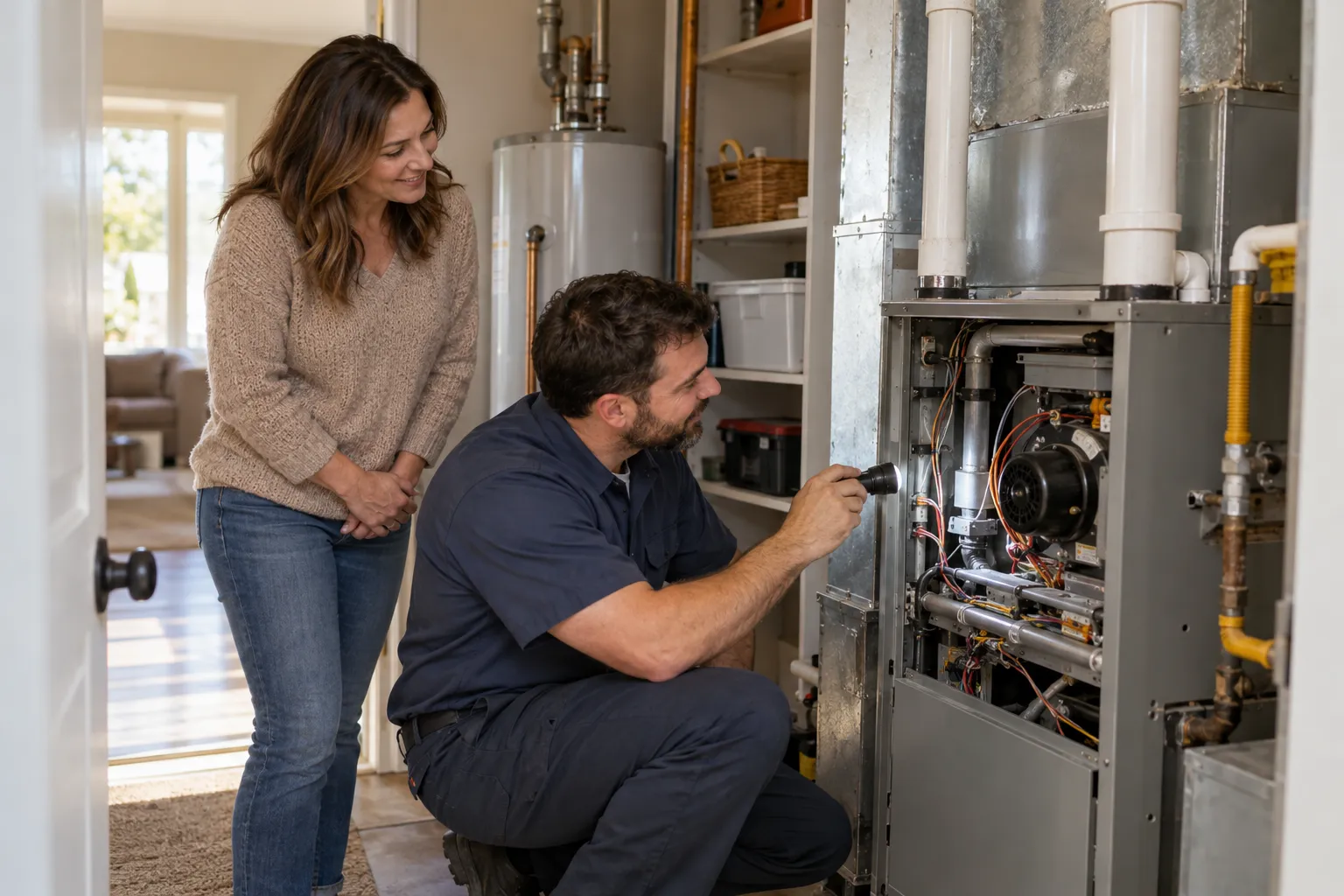
A furnace that will not heat, blows cold air, or makes odd noises needs a clear plan. Individualsshoulder Heating & Air is a referral service. We do not repair furnaces. Independent providers in our network do the work.
Here is how it goes. First, you learn what the problem may be and what your choices are. Next, you connect with a local provider in the Fate area. Then you compare quotes and pick what fits your home. Mild winters here still bring cold snaps, and a working furnace protects your comfort and your home's value. There is no obligation to hire anyone.
Smell Gas? Stop and Read This First
If you smell gas, act on safety before anything else.
1. Do not turn on lights or switches. 2. Do not use a lighter, match or phone inside. 3. Leave the house with everyone, pets included. 4. Call your gas utility or emergency services from outside.
Do not try to relight or restart the furnace afterward. Wait for a qualified professional to clear it.
Other Urgent Warning Signs
Leave the home and get help if you notice any of these:
- A carbon monoxide alarm is sounding
- Soot or black marks around the furnace
- Headaches or dizziness that ease when you go outside
- A burning smell that does not fade
First, Check Basics
Many no-heat calls start with a simple cause. Try these steps in order.
1. Set the thermostat to heat and raise it five degrees above room temperature. 2. Check that the thermostat has fresh batteries, if it uses them. 3. Look at the breaker panel for a tripped switch. 4. Make sure the furnace power switch, often shaped like a light switch, is on. 5. Check the air filter. A clogged one can shut a furnace down.
If the basics do not help, stop there. Do not open sealed panels.
Common Signs Your Furnace Needs Repair
Some signs are loud. Others are quiet and easy to miss.
Sudden Problems
- No heat at all
- Cold air from the vents
- The furnace starts, then shuts off fast
- Banging, squealing or grinding sounds
Slow Warning Signs
- Rooms that heat unevenly
- Energy bills creeping up
- A pilot or burner flame that looks yellow instead of blue
- Longer run times to reach the set temperature
In our region, the furnace may sit idle for months. Trouble often shows up on the first cool night of the season. Testing it early gives you time to compare options.
Know Your Options
You usually have three paths.
1. Minor repair. A part is swapped or cleaned and the system runs again. 2. Larger repair. A major part, such as a blower motor or heat exchanger, needs work. 3. Replacement. The unit is old or worn, and a new one makes more sense.
A provider can explain which path fits your furnace after looking at it.
What Happens During a Repair Visit
First, the provider asks about symptoms and when they started. Next, they inspect the furnace, the thermostat, the filter and the venting. Then they test the ignition, burners, blower and safety controls.
You should get a plain explanation of what they found. Ask for a written quote before any larger work begins.
What to Have Ready
- The furnace age, if you know it
- Brand and model from the label
- What you saw, heard or smelled
- What you already tried
Common Furnace Repairs
- Ignitor or pilot parts. The burner will not light.
- Flame sensor cleaning or replacement. The furnace lights, then quits.
- Blower motor or capacitor. Air does not move well.
- Thermostat fixes. The system gets the wrong signal.
- Control board repair. The unit acts erratic or will not start.
- Cracked heat exchanger. This is serious and often points toward replacement.
Repair or Replace Your Furnace?
This choice depends on age, repair cost and condition. Weigh these points.
- Age. Many furnaces last 15 to 20 years. Older units tend to need more repairs.
- Repair cost. If a fix costs close to half the price of a new unit, replacement deserves a look.
- Safety. A cracked heat exchanger is a common reason to replace.
- Comfort and bills. Newer units can run more efficiently.
Protect Your Home's Value
A well-kept heating system supports comfort and can help when you sell. Buyers and inspectors often check the furnace. Repairs done properly, with paperwork saved, make that easier.
If a new system is the right call, a local provider can walk you through that choice. Replacing a whole system is a separate topic covered on its own page.
Next, Compare Quotes
Get more than one quote when the job is not urgent. Compare the scope of work, parts, warranty terms and timing. Do not pick on price alone. Clear details matter more.
Questions to Ask the Provider
1. What is wrong with the furnace, in plain words? 2. Is this a repair now, or a sign of bigger trouble? 3. What does the written quote include? 4. Are parts and labor covered by any warranty? 5. How soon could the work start? 6. What happens if the first fix does not solve it?
Keep the Furnace Healthy After the Visit
- Change the filter on a regular schedule.
- Keep vents and the area around the furnace clear.
- Schedule a yearly tune-up before cold weather.
- Keep carbon monoxide alarms working and fresh.
What's Included
Safety Checks
Providers look at the burners, venting and controls so the furnace runs the way it should.
Fault Diagnosis
A provider tests the ignition, blower and thermostat to find why heat is missing.
Part Repairs
Worn ignitors, sensors, motors and boards can often be fixed or swapped on the visit.
Clear Options
You hear whether repair or replacement fits your furnace, and you get a written quote first.
Typical Furnace Repair Costs
Prices vary by furnace type, part, home and provider. These are typical U.S. ranges only. Always ask for a written quote that lists parts and labor before work begins.
| Item | Typical range | Notes |
|---|---|---|
| Diagnostic visit | $75 – $200 | Often applied toward the repair |
| Flame sensor service | $100 – $300 | Common cause of shutoffs |
| Ignitor replacement | $150 – $400 | Depends on furnace model |
| Blower motor repair | $300 – $900 | Varies by motor type |
| Control board | $300 – $800 | Parts price differs by brand |
| Heat exchanger repair | $1,000 – $3,500 | Often leads to a replacement talk |
How It Works
Check Basics First
Look at the thermostat, breaker, power switch and filter. Skip anything that needs opening panels.
Call or Request an Estimate
Request a callback to check provider availability, or use the request form.
Talk Through Options
A local provider inspects the furnace and explains repair or replace choices.
Compare Quotes and Choose
Review the written details, ask questions, then pick the plan that fits.
Why Call Individualsshoulder Heating & Air
Clear Options Before Work
You learn what repair, major repair and replacement mean before you agree to anything.
Independent Local Providers
Providers in our network are separate businesses that work in your area.
Plain Next Steps
Short, ordered steps help you decide without guessing or pressure.
No Obligation
Asking for an estimate does not require you to hire anyone.
Other Services
Need home furnace repair in Fate?
- Check your options before you commit
- Independent local providers in your area
- Repair, furnace or replacement help
- No obligation
Home Furnace Repair FAQ
Why is my furnace blowing cold air?
Common causes include a thermostat set to fan only, a dirty filter, a failed ignitor or a tripped safety control. Check the basics first. If cold air continues, a provider can test the system.
How much does furnace repair usually cost?
Most repairs fall between about $150 and $1,000, depending on the part and labor. Major parts cost more. Ask for a written quote before approving any work.
Should I repair or replace an old furnace?
Consider age, repair cost and safety. A unit over 15 years old with a costly repair may be worth replacing. A provider can explain both choices.
Reach a local provider
Ready to sort out your AC or furnace problem? Send a request or reach out by email. Share a few details and we will point you to a provider.
No obligation